
.For The Chapel, choosing Colourstart was about protecting creative freedom and bringing a consistent approach to guest care across the group. Symon May explains how the change supported both the work of individual colourists and the running of five salons.
At The Chapel, the conversation comes before the colour. Each salon has a separate space where guests can sit with their hairdresser, away from dryers and mirrors, and talk about their lives and what they want from their hair.
“You really need to understand someone’s lifestyle,” says Symon, a colour specialist who educates and mentors the teams across the group. That understanding helps shape the colour chosen on the day, and it was the freedom to make that choice that first drew him to Colourstart.
The immediate challenge for The Chapel was insurance. Symon describes how their insurance cover was limited to the particular colour product used for a guest’s test. If the consultation led to a different colour choice on the day, he felt that restriction could get in the way of the work, as a new test would be needed.
“So, it was more the creative aspect really for me,” he explains. With Colourstart in place and the guest’s Passport showing that they are “OK to colour hair”, he describes being able to use “any product, any colour, any range”. For The Chapel, that flexibility matters because the consultation is not simply confirmation of a decision already made. It is an opportunity to respond to the person sitting in front of the colourist, using the colour that suits them on that day.
Creative freedom was one part of the decision. The other was choosing an approach to allergy screening that reflected the professional care The Chapel wanted to offer.
Colourstart is a licensed medicine used to screen for allergy to the hair colour ingredient PPD. For Symon, using a medically licensed test fitted the group’s care message and recognised the seriousness of the work hair professionals do.
He sees that same recognition in the education offered to Colourstart salons. Training included with the subscription covers nutrition, hair loss, menopause and occupational dermatitis, supporting hairdressers in their working lives and in conversations with guests.
Knowledge helps the team do its job. For Symon, it is a practical expression of the respect he believes the industry deserves.
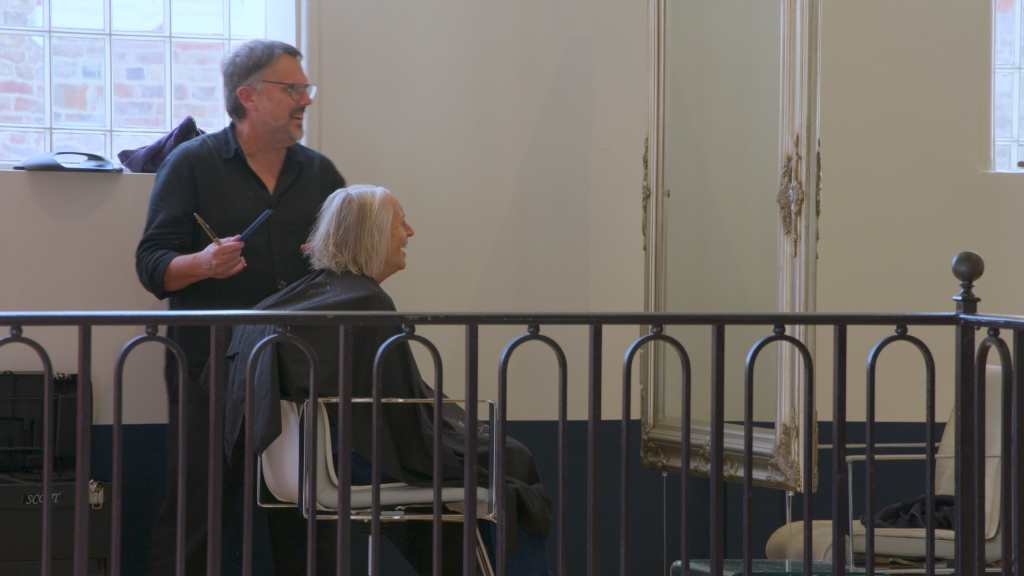
The Chapel began with a small rollout, not a group-wide announcement. Symon introduced Colourstart to his own guests first so he could understand the questions and any potential difficulties before involving the wider team.
The approach then extended across Tunbridge Wells and on to the other four salons. Symon visited each team to explain the reasons for the change and the process they would follow. Posters and postcards supported those conversations, with emails to guests following later.
Not everyone moved at the same pace. Some team members began immediately; others needed to see how it worked. Symon found that completing the process with one guest often gave a colleague the confidence to introduce it more widely.
There was a similar difference between new and long-standing guests. For new guests, Colourstart became part of the consultation from the outset. Those who had visited for many years sometimes needed more explanation about why the process was changing.
The team kept that explanation connected to the purpose of the appointment: caring for the guest and being able to do the most appropriate creative work for them. They also explained that a guest’s Colourstart Passport could be shared with other hairdressers participating in Colourstart, not only The Chapel.
With five salons and 69 members of staff, Symon values having a clear structure that can be followed throughout the business.
“We have a lot of people coming in to us, so we needed to make sure that everyone was given the same care that somebody else would be.”
The automation between Colourstart and the group’s Phorest booking system helps the teams see a guest’s Colourstart status alongside their booking record. They can easily identify who is “OK to colour hair” and who is still progressing through the process.
That shared approach extends beyond The Chapel. Clients can share their Passport with any participating salon, giving hairdressers a common process and a current screening status to refer to.

The business benefit became particularly clear when The Chapel changed colour brands. Symon explains that, under the previous approach, the change would have created a substantial testing exercise involving the new products.
With Colourstart already in place, the experience was completely different: “Because of Colourstart, we can use any hair colour brand on their hair.” Colourstart gave the group a common allergy-screening process, supported by insurance, that was not tied to its choice of colour brand.
This is where the creative and operational benefits meet. An individual colourist can respond to a guest’s needs, while the group can reconsider the products it uses without rebuilding its allergy-screening approach around each brand.
Clients do not need to use Colourstart again provided it has been used correctly, the result was negative and they continue to have an “OK to colour hair” Passport status, in accordance with the Patient Information Leaflet. Before each subsequent colour service, clients complete the risk-based Passport questionnaire to re-screen.
For The Chapel, standardising the process has not meant standardising the colour. It has provided a shared basis for guest care across the business, while leaving the creative decision with the hairdresser and the guest.